
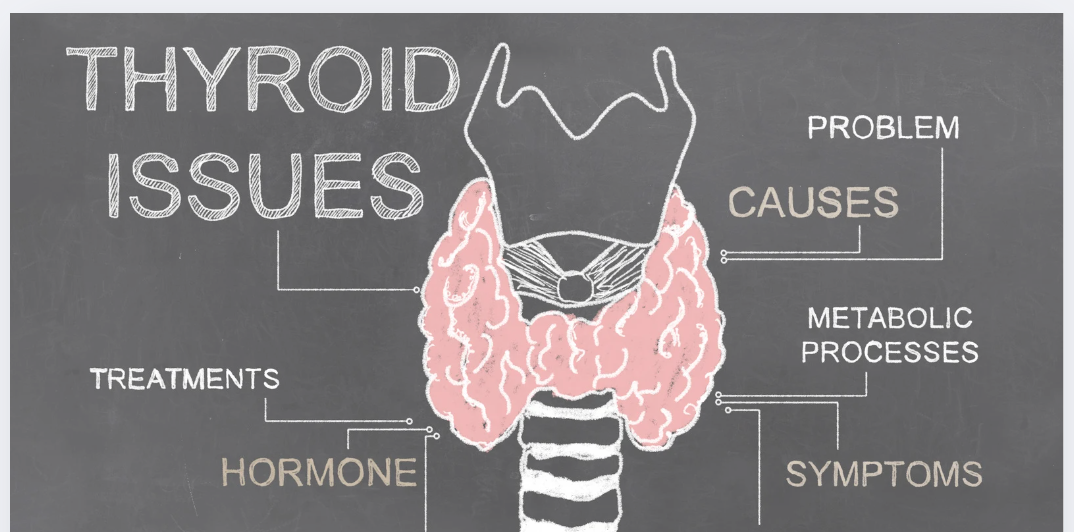
If you’re reading this because you’ve been told “your thyroid labs look fine” — but deep down you know something isn’t right.
I want you to hear this first: You’re not crazy. And you’re not broken.
I see this every single week in my practice. People walk in feeling exhausted, frustrated, and often discouraged. They’ve been doing everything they’ve been told to do, yet their body still feels off. Some have been told they’ll need thyroid medication for life. Others were told everything looks “normal” and sent on their way — even though their symptoms never went away.
What’s often missing in these conversations isn’t care or effort. It’s understanding.
As a chiropractor practicing with The Wellness Way approach, my role isn’t to diagnose or treat thyroid disease. My role is to help people understand how their body works, how systems communicate, and why symptoms are meaningful signals — not random inconveniences.
Why Do I Still Feel Off If My Thyroid Labs Are Normal?
This is one of the most common questions I hear — and one of the most searched thyroid questions online.
Research shows that many people experience symptoms commonly associated with thyroid imbalance even when standard lab work falls within reference ranges. Why? I’ll get to that. The disconnect can be incredibly frustrating, especially when you’re trying to advocate for your health (raising your hand to say that something doesn’t feel right) and are told there’s nothing to worry about.
Some of the most common thyroid symptoms (even when labs are normal) that people share with me include:
- Persistent fatigue or low energy
- Feeling cold easily
- Hair thinning or hair loss
- Brain fog or difficulty concentrating
- Anxiety, irritability, or low mood
- Weight gain or unexplained weight changes
- Constipation or sluggish digestion
- Changes in menstrual cycles or fertility challenges
Symptoms alone do not diagnose a thyroid condition. But they do tell us that the body is adapting to stress in some way. When symptoms are persistent, they deserve context — not dismissal.
One of the hardest parts of this experience is being told that symptoms “don’t matter” unless labs confirm them. But symptoms are often the first way the body signals that something is shifting. Long before a lab value crosses a diagnostic threshold, the body may already be adapting to stress, inflammation, or communication breakdowns.
This is why so many people feel dismissed. They know their body well enough to recognize when something has changed — yet they’re told everything looks fine on paper. That disconnect doesn’t mean the body is wrong. It means we may not be asking the right questions… yet.
What Are Thyroid Symptoms Trying to Tell You?
One of the biggest shifts I help patients make is moving from “What’s wrong with me?” to “What is my body trying to communicate?”
Rather than focusing on a single symptom, it’s more helpful to look for patterns, because the thyroid influences — and is influenced by — many systems in the body.
Energy & Metabolism
Low energy, difficulty maintaining weight, and cold intolerance can signal that the body is struggling to meet metabolic demand.
Brain & Mood
Brain fog, anxiety, irritability, or feeling emotionally flat are often brushed off as stress or aging — but these experiences matter.
Digestion & Hormones
Constipation, bloating, irregular cycles, and fertility challenges may feel unrelated, but they often share overlapping communication pathways in the body.
Your body isn’t failing you. It’s communicating.
I often explain thyroid symptoms like a check engine light on a car. The light itself isn’t the problem — it’s a signal. It’s the car’s way of saying something in the system isn’t functioning as smoothly as it should.
You wouldn’t just cover the light with tape and keep driving. You’d want to understand why it turned on. Thyroid symptoms are similar. Fatigue, brain fog, weight changes, or feeling cold aren’t random inconveniences — they’re messages pointing us toward what the body has been adapting to.
What Thyroid Tests Are Usually Run — and Why Do They Feel Incomplete?
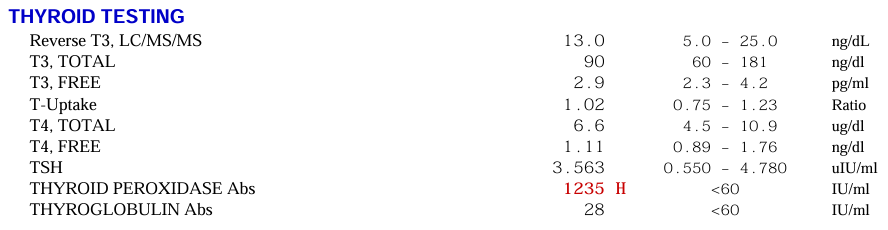
Most people are familiar with TSH (thyroid-stimulating hormone) because it’s the most commonly ordered thyroid lab.
TSH is produced by the pituitary gland in the brain. TSH reflects how strongly the brain is signaling the thyroid — not how thyroid hormones are being converted or utilized throughout your body and at the tissue level.
In many cases, additional markers — such as free thyroid hormones or thyroid antibodies — are never discussed. This doesn’t mean standard (TSH) testing is wrong. It means your testing may be limited or incomplete.
And when testing is limited or incomplete, explanations tend to be limited too — and that’s where confusion often begins.
In practice, this often looks like focusing on one number (TSH levels) instead of understanding the broader picture (TSH levels, Free Thyroid, Thyroid antibodies…). Thyroid signaling involves communication between the whole body: the brain, the thyroid gland, the immune system, and the tissues that actually use thyroid hormone (such as your gut and liver). When we only look at one part of that system, it’s easy to miss where interference may be occurring.
This doesn’t mean standard labs are useless. It means they’re a starting point — not the full story. More context allows for better conversations, clearer expectations, and far less confusion for patients trying to make sense of their symptoms.
Why “Normal” Labs Don’t Always Mean You Feel Normal
Lab reference ranges are based on population averages. They are not designed to capture how an individual person feels or functions.
I often remind patients: lab work is information, not a verdict. When symptoms persist, it’s reasonable to ask whether more context could help explain what’s going on.
Wanting more understanding doesn’t mean you’re being difficult. It means you’re listening to your body.
I’ll say it again.
Wanting more understanding for your body, doesn’t mean you’re being a difficult patient.
Another thing I often hear in this conversation is, “Why does it feel like so many people are dealing with thyroid issues now?”
From what I see clinically, it’s rarely one single cause. The thyroid is incredibly responsive to what’s happening in the rest of the body — especially over long periods of time. When stress becomes constant, sleep is disrupted, inflammation lingers, or the body is asked to keep pushing without adequate recovery, the thyroid often adapts right along with everything else.
That adaptation doesn’t happen overnight, and it doesn’t always show up clearly on early lab work. But the body feels it- that’s your alarm. Over time, people notice they don’t bounce back the way they used to, their energy changes, or symptoms begin stacking in ways that don’t feel random.
Seeing thyroid patterns more often doesn’t mean bodies are failing. It usually means they’ve been compensating for a long time.
Where Thyroid Medication Fits Into the Conversation
Thyroid medication can play an important supportive role for some individuals, and it’s important to approach this conversation with clarity and respect.
One of the most commonly prescribed thyroid medications is levothyroxine, which is a synthetic form of T4 (thyroxine)⁷. T4 is often described as a “storage” or “pro-hormone,” meaning the body must convert it into more active forms before it can be used at the cellular level.
What many people are never taught is that the thyroid gland naturally produces more than one hormone.
In a healthy thyroid, hormone output includes:
- T4 (thyroxine)
- T3 (triiodothyronine) — the most biologically active form
- T2 and T1 — lesser-known thyroid hormones involved in metabolic and cellular signaling
Thyroid medication like levothyroxine supplies only one hormone: T4. It does not replicate the full spectrum of hormones the thyroid produces, nor does it replace the body’s complex regulatory processes.
This isn’t a criticism of medication — it’s an explanation.
Research shows that some individuals continue to experience symptoms even when TSH levels fall within the reference range while taking T4-only medication. This does not mean medication has failed. It highlights an important reality:
Hormone replacement is not the same as hormone regulation.
Medication may support hormone levels, but the body still must:
- Convert hormones into active forms
- Transport hormones into cells
- Regulate their effects at the tissue level
Without education around this process, many people feel confused or discouraged — especially when labs improve but symptoms remain.
Medication can be one piece of the picture. Education helps you see the whole picture.
Is Your Thyroid the Problem — or the Messenger?
This is where I introduce a concept we talk about often at The Wellness Way: The Swiss Watch Principle.
If a Swiss watch stops working, we don’t blame one tiny gear. We look at the system.
The thyroid responds to signals from the brain, nervous system, immune system, and overall stress load in your body. When the body is under chronic stress, the thyroid often adapts and says “priority is now X only, forget Y and Z”— and that adaptation can show up as symptoms or lab changes.
From a chiropractic perspective, this isn’t failure. It’s communication.
Why So Many People Feel Stuck With Their Thyroid
Many people feel stuck because:
- Testing is limited or incomplete
- Symptoms are treated as isolated issues
- The “why” behind changes is hardly discussed
- The conversation stops too early
When people don’t understand what’s happening in their body, it’s hard to feel hopeful — even when they’re doing everything they can.
There Is a Better Way to Look at Thyroid Health
At The Wellness Way, we believe clarity changes everything.
Instead of starting with solutions, we start with questions — questions that help us understand why the body may be adapting the way it is. That shift alone often brings relief, direction, and hope. We want to know all about you and your stressors that can impact thyroid function– your habits, your diet, your sleep schedule, your digestion, etc.
In the next blog, I’ll walk you through those questions and explain why they matter.
It Starts With a Conversation
If you’ve felt dismissed, confused, or discouraged on your thyroid journey, I want you to know this:
There is more to your story.
If you’ve lost hope, I’m here to help you find it again. Not send you off on a quest- but to walk alongside you until we get you feeling your best.
At The Wellness Way – Lake Forest, we believe your body is intelligent, adaptable, and worthy of understanding.
Have questions about your thyroid labs or symptoms?
📧 Email us — I’m always happy to talk.
It starts with a conversation. And I’m all ears.
Disclaimer: This content is for educational purposes only. It’s not intended as a substitute for the advice provided by your Wellness Way clinic or personal physician, especially if currently taking prescription or over-the-counter medications. Pregnant women, in particular, should seek the advice of a physician before trying any herb or supplement listed on this website. Always speak with your individual clinic before adding any medication, herb, or nutritional supplement to your health protocol. Information and statements regarding dietary supplements have not been evaluated by the FDA and are not intended to diagnose, treat, cure, or prevent any disease.

